


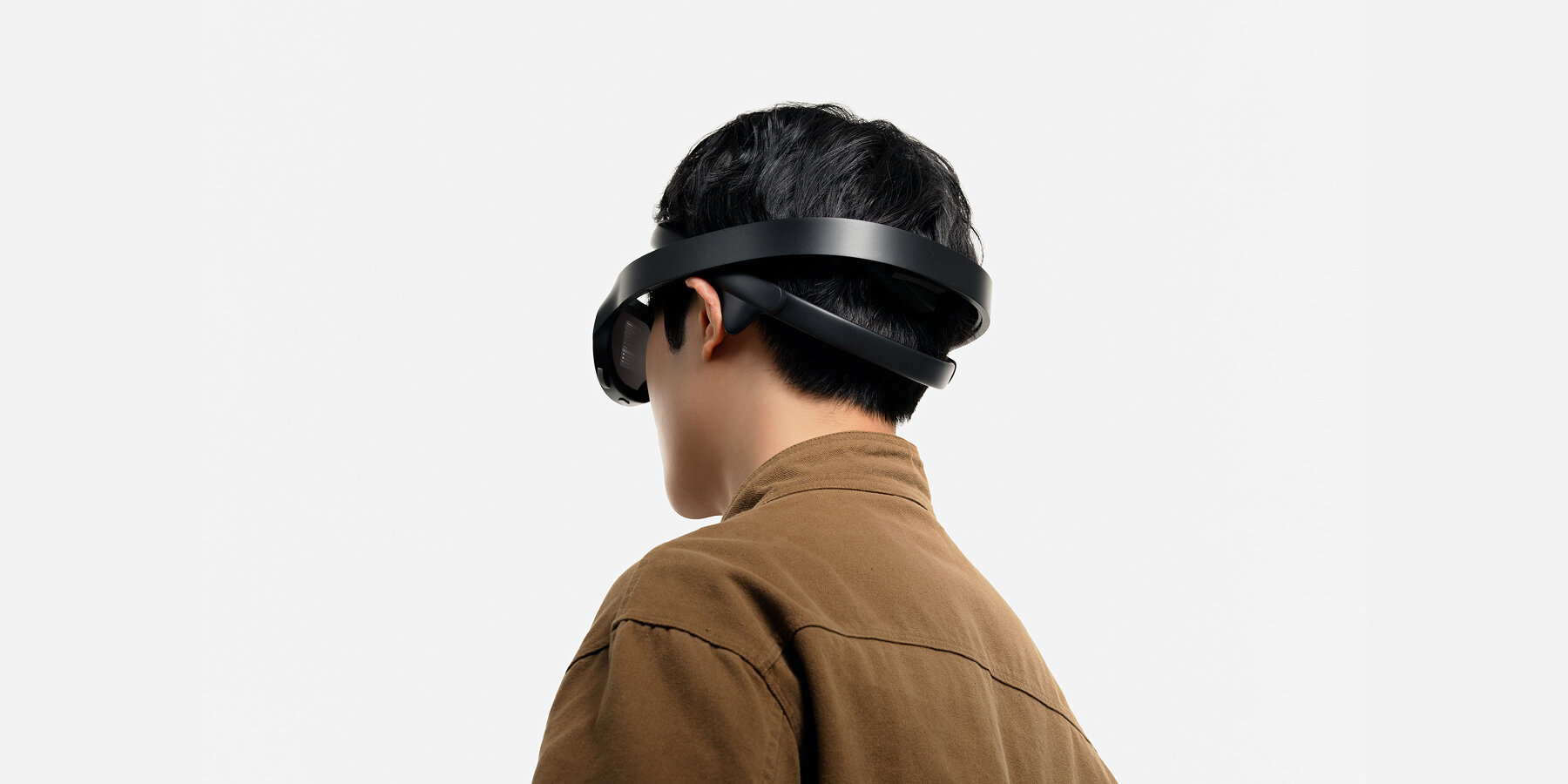
LIZE is a conceptual wearable designed to help overstimulated minds by adapting visuals in real time to brain activity. Excessive digital exposure can lead to cognitive fatigue and stress, and LIZE addresses this by integrating EEG sensors into a sleek, minimal form. Electrodes on the forehead and behind the ears measure brain signals, guiding adaptive AR visuals and algorithms that create a calmer, more restorative digital environment.


Developed by designers Chaewon Lee and Seunghyun Ko, LIZE reimagines neuro-sensing beyond clinical settings, translating technical EEG requirements into a wearable that is unobtrusive and emotionally considerate. Its structure uses two intersecting loops: an outer loop defines the device’s smooth silhouette, while an inner loop ensures reliable electrode contact. The result is a continuous, minimal form that balances technical precision with approachable aesthetics.
A dark, seamless visor gives the device a protective, composed character, while softened geometry and reduced part lines reduce mechanical harshness, making the headset feel less like equipment and more like a personal companion. Compact electrodes are embedded directly into the frame, allowing the device to sense brain activity discreetly and continuously.
By merging sensor logic with sculptural design, LIZE transforms neuro-responsive technology into a human-centered tool. It quietly supports well-being, helping users interact with digital environments in a calmer, more mindful way.